So I’m psyched because just a I run out of grease on the Farewell, My Subaru Carbon-neutral Book Tour (hardcover leg), I get a call from Danny at an outfit called Plant Drive in Berkeley California. I’m running on fumes at this point, albeit extremely delectable Kung Pao Chicken fumes, and this dreadlocked 40-something offers to sell me 70 gallons of prime waste oil, on almost no notice.
There were only three minor downsides to this stroke of good luck and kindness. One, Danny didn’t have a pump to ease the movement of vegetable oil into my tank, the way you would at a normal gas station (and like I do when I “dumpster dive” waste fryers for my own grease). So when I backed the R.O.A.T. (Ridiculously Oversized [but carbon-neutral] American Truck] into Danny’s garage and I began dumping five gallon plastic restaurant “cubie” containers of prime grease into my tank, the funnel I was using to (I thought) facilitate the transfer in fact created a massive air pocket in the tank. This, in turn, resulted in a Yellowstone geyser-like spurt of waste vegetable oil all over my clothes, bike, windshield and person in the R.O.A.T. bed as the last bit of oil in each cubie cascaded, temporarily, into the tank.
This leads to the second minor problem, which was that this messy mishap solidified my 1,000 batting average for showing up at my friends Michael and Ali’s place in San Francisco smelling like something horrible and unfamiliar. Last time, for instance, I turned up, shall we say, Organically Redolent after a week of showerless camping and dancing at Oregon County Fair. They took my grease cologne well, as they always do, observing but not judging my scent and offering me their shower generously and immediately. The R.O.A.T, unlike my clothes, was soon de-greased at a (gotta love Berkeley) solar-powered car wash.
The third issue, not really a down side when I think about it, is that Danny’s grease comes from a local vegetarian Indian Restaurant, leading to a new Asian Food addiction to add to my Thai, Chinese and Japanese ones. For the next 1,500 miles, instead of the normal Kung Pao Chicken exhaust, now the R.O.A.T. spouted fumes that had me pulling over for every chance at curry and dal.
There was nearly one more complication from this important tour pit stop on a gorgeous Bay Area spring afternoon, and that was it appeared at first like the Plant Drive bathroom had only the mildest of herbal “hand and body creams” with which to clean the greasy carnage off my hands, face, even feet (I was in open-toed Chaco sandals). I could believe a business purveying waste oil (actually the Plant Drive folks share their space with a bio-diesel cooperative) would have only such non-toxic natural cleaning agents. This was, after all, Berkeley. But then on a high, out-of-favor shelf (the same spot where any of us would stash the products of which we’re less than proud), I found one of those industrial “citrus scrub” abrasive cleansers whose bottles come from the factory already dirty and feature a pump action for your ickiest hands. Meanwhile, that fill-up got me all the way to Seattle without having to stop at a petroleum gas station. Thanks a lot to Danny and Craig of Plant Drive, and congrats to Danny on his new baby.
Postscript: One of the most fascinating components of being on a road trip – albeit a carbon-neutral one – in a time of the highest fuel prices in history, is the eerie phenomenon of no one driving on the Interstates. Their ghost roads, when it comes to passenger vehicles. This shot is typical, taken from outside the R.O.A.T. window on I-15 in Northern Utah.
The freeways all over the American West in April and May of Gregorian 2008 essentially consisted of the R.O.A.T. and a massive train of tractor trailers, their drivers keeping it at a fuel-efficient 65 MPH. (At truck stops when I’d stop occasionally for restroom breaks, more than one trucker saw my “Powered by Vegetable Oil” sticker and asked me in hushed tones if they could convert their engines, too.) Another way to put this is that there are very few American Griswald families on a National Lampoon Vacation this spring. There were some foreigners in RVs taking advantage of the weak dollar, but not many. Which really brings his whole R.O.A.T. project home for me. For all the greasy fill-up foibles, for all the munchies-inducing Kung Pao and now curry exhaust, I have been passing by gas stations from state to state to state, all but immune to the highest petroleum prices in the history of the industrialized age. And I feel fine. Here’s to sustainable Rugged Individualism. With a lot of help from vegetable oil purveyors in places like Berkeley (and later in Seattle – thanks, Matt, for that timely fill-up!). We’re all in this together – even all of us “individualists.”

![]()
(Have Your People Call My People — Doing Deals In My Dressing Room. OK, pizza deals, but still.)
So as fantastic as appearing on the Tonight Show With Jay Leno was today (a link to the segment is below), I’m especially appreciative of the eco-friendly shwag bag Jay and the genuinely warm and Earth-interested producers gave me. Made of organic cotton and burlap, it included a compact fluorescent light bulb that I needed when I got back to the hotel room and found the reading lamp bulb burnt out. So that, and 12 million people hearing about
(Jay’s Cue Card — in case he forgot Prince’s name)
Jay asked intelligent questions, by the way, and Prince gave a three song concert after his appearance on the show (which was interrupted by the first ever fire alarm evacuation during a taping of the Tonight Show — I had nothing to do with it, but thought I did, as I flushed the toilet just as the flashing lights went on all over the building. I briefly believed I had won some sort of jackpot, or violated some obscure Southern California water use law. The source was actually an an errant smoke machine at Access Hollywood). The other guest this night was Hugh Laurie, who leaned over and told me, “Great stuff. You did really well,” when my segment went to commercial. This was extremely kind and relieving, as I had no idea what I said. I was too tired (from the long book tour) and nervous (from uncertainty about the fashionability of my new cowboy hat — the old one had too much goat poop on it for national network distribution).
So, to watch the segment in all its Rhinestone Cowboy glory, (be sure to follow the steps below the link to get to the right day and segment) go to:
http://www.nbc.com/The_Tonight_Show_with_Jay_Leno/video/episodes.shtml
Then click on April 25, then click on “select chapters,” then click on the fellow with the cowboy hat, second from the right. They’ll make you watch a commercial, then enjoy.
I just returned to Planet Earth to post this. For me, it’s Leno one day. goat-milking the next. More posts from the carbon-neutral book tour soon, of course, including the greasiest non-fossil-fuel-fill-up in the history of auto mechanical propulsion (and the veggie oil came from a vegetarian Indian restaurant in Berkeley, California, so my exhaust-inspired cravings migrated abruptly from Kung Pao Chicken to curry).
Oh, and here’s the video from a CNN interview I did recently — all of this media stuff will be up on the new “News and Reviews” link in the right column of his page.
Why on earth did the Creator bestow preconceptions on us? To prove how often we can be wrong? This is not the first time that my inspiration for a Dispatch has come from this baffling, seemingly important genetic trait. In the latest drastic example of the preconception phenomenon, for months I had thought that the most exciting element of the first Funky Butte Ranch goat births would be the “zero carbon mile, totally organic FBR Goat Ice Cream” that would magically appear when the kids were weaned. I even have a goat ice cream recipe (and ice cream maker) link set up on this site (see the right column, and indeed it’s been — in this case literally — sweet to see from the response I’m not nearly alone in my ice cream addiction).
But ice cream (this will shock some readers) is actually just the icing on the cake (again literally). In truth, I was so relieved that Natalie safely gave birth to two already-mischievous kids at 8:30-ish p.m. the other night, that I realized immediately the best part of goat husbandry is my love of the goats. They’re part of the family. That’s no secret to anyone who has read these Dispatches over the last year and a half (and for blog newbies, you can read through and search all the previous Dispatches).
In short, I was a relieved father. I mean, Natalie is an animal I raised since before weaning, bottle-feeding her with a shotgun in my lap like a modern-day Elmer Fudd so the local coyotes didn’t treat her as low carbon-miles buffet. As she had no epidural options, I had been more nervous than I realized about her well-being during delivery. In truth, it was a piece of cake (not literally this time).
Since I’m currently on the Farewell, My Subaru carbon-neutral book tour, I leaned this from my friend and ranch-sitter Ken, who called me and left the following message on my voice mail: “Um, Doug, I noticed something strange in the goat corral: your number of goats had just doubled.”
He had fed Natalie and Melissa at 8 p.m. (two hours late because a squall had come in during normal feeding time). Nat ate voraciously as always, showing no sign of labor. She was round as a weeble-wobble from her five-month pregnancy, but that was normal. When he checked on them at 9, he said, “There were two extra goats in the straw.”
So I’m in bliss and even though the book tour is going fantastically and I’m having a great time, I CAN’T WAIT TO GET HOME TO SEE THEM. And, of course, soon after, to get overwhelmingly steamed at them for eating, stomping or accessing something I don’t want them to on the ranch. Welcome to goat husbandry. Above is one the first photo Ken emailed me. Mother and future pains in the asses are doing great. Thanks so much Ken, for midwifing so successfully – even if it just meant giving Natalie some space.
So ice cream is the last thing on my mind, contrary to my expectations. The fact is, there are far more important things going on in my heart. I swelled with paternal love, for example, to learn that Natalie immediately took to mothering, cleaning off the kids and nursing immediately. Evidently some first time mothers don’t.
Most of all I’m just glad she’s through any labor pain. I feel the pride any new father feels. Even an interspecies one. It is fantastically more intense than any pride I’ve felt before. And all I did was pick up two goats off Craigslist two years ago. But I am not embarrassed about my pride. I am a goat dad. And it almost make Walt the Scimitar-wielding Billy Goat’s Visit worth it.
The kids don’t have names yet, by the way, but in keeping with the singers-who-sound-a-little-goat-like motif (Natalie Merchant and Melissa Etheridge so far), I’ve already gotten a suggestion that I should name the male Bob (Dylan). I’m open to suggestions for the female.
On no sleep and trapped on the wrong side of the River during the worst (and pretty much only) snow storm of the winter, I waited in Silver City at 1 a.m., (where Billy the Kid and now I were briefly imprisoned, 120 years apart), for my childhood friend Jason Ensler to literally skid into New Mexico with his cameraman on a spur-of-the-moment jaunt from L.A. He’d told me how much he believed in the Farewell, My Subaru project, but when the guy – a supremely talented director, as you’ll see in this film, and in a new NBC pilot he’s directing called “The Man of Your Dreams” – showed up in a blizzard that had even grizzled locals worried about our prospects for getting across a 6,000-foot mountain pass and home to the Funky Butte Ranch alive, I knew that this was going to be a special endeavor. He was even driving, yes, a rental Subaru. The car company’s choice. Karma appeared to be with us.
I recognize that this film must have been shot, because there I am hanging from windmills and delivering progressive-but-I-hope-not-preachy-dialogue about how anyone can get off petroleum if I can, but I have little memory of it. I was that tired. All I can say is, 1) it tells the story of the carbon-reduction project documented in Farewell, My Subaru remarkably well, 2) the snow is incredibly atypical in an era of Dramatic Climate Change, and added a great cinematic touch since the grid power went out and the Ranch still had solar-powered juice, and 3) I’m really appreciative to Jason Ensler for coming to shoot it – the writer’s strike had just ended, and he had to dash back the next day to start the pilot for NBC (Don’t miss it — Jason also has directed tons of films and television programs including “Andy Barker P.I.”, “West Wing” and “Scrubs”). So click on play above to see the Farewell, My Subaru film – the first, five-minute one, I should say.

(Photo By Jason Ensler)
Been swept away by the current wave of organic rural songwriting yet? Modern country music, the real stuff, not rural Britney, is almost invariably progressive, because the folks going back to living on the Earth are tending to try to live in sync with it (in fact they’ve only recently converted from “people” to “folks”). The commercial country song about farm and apple pie of recent decades is coming across as fake — down to the contrived twangy accents of the manufactured McArtists — because there ain’t no farms and apple pie no more in much of the heartland. Just strip malls and McDonalds. And the occasional GMO factory and manure lake. The form remains, but the lyrics are imaginary. Except where the acoustic roots revival is hitting its stride.
And nothing can stop it. A physical place makes its music – this is why gangsta rap didn’t originate in, say, Iceland, and why after two years on a remote 41-acre ranch I am involuntarily shopping for a mandolin or a banjo after growing up in a suburb that didn’t even have a country station, let alone the John Prine cult I find to be a feature of any healthy subculture. And it’s also why, when I try to coax the Funky Butte Ranch goats away from whatever mischievous situation they’ve gotten into on a particular day (eating my roses, dancing on the roof of the Ridiculously Oversized American Truck), I generally find myself humming bluegrass (or roots reggae). The goats Natalie and Melissa’s favorite song, by the way, is a slightly lyrically modified version of Bob Marley’s Them Belly Full, which I sing to them as I trot (or in the very pregnant Natalie’s case, waddle) them back to the corral after a morning of foraging the Ranch’s abundant Apache Plume bushes:
Them Belly Full
But They Hungry
A Hungry Goat
Is Every Goat
Music, as anyone who has spent a endearingly frustrating hour around the caprine mind can attest, is the only thing that will make a goat behave. Natalie, as you can see in this photo, actually smiles when I sing to her. Not by accident is the drunken music-loving Greek god Pan represented as a goat. The Athenians country music stations were real.
And as for the organic song in my head today (I almost always have a soundtrack in my head, and it is usually telling me how I feel), it’s How Mountain Girls Can Love. If you are reading this while living in a demographic where there’s still no John Prine cult, this is a Ruby Rakes number that always sets me – and the goats – dancing in the organic equivalent of a sufi trance slam dance. Check out the Stanley Brothers’ version. Even if trapped in city walls, suburban sprawl or office cubicle, you might find you’re more of a knee-slappin’, yee-hawing, straw-in-your-teeth mauve-neck than you realized. I know I am.
Of necessity, we summarize events. The world, via this blog and soon from the book Farewell, My Subaru, knows that I drive on Vegetable Oil. That’s the label. I’ll wear it proudly. But like all labels, it doesn’t tell the complete story. We don’t have time for all the details. They cloud the message. Bob Marley wasn’t a great refrigerator repairman. It just doesn’t affect his musical legacy. Only very, shall we kindly say, “detail-oriented” biographers delve so deeply into such biographical nuances.
Maybe we should delve a little, if only to show that there is almost always more to the story behind the mainstream talking point. This is why for the sake of that behind-the-scenes feel that only the truly honest blog brings the late night reader, I will disclose the story of the R.O.A.T. (Ridiculously Oversized [but carbon-neutral] American Truck that you won’t see me telling big media.
Here it is: even on vegetable oil, a diesel engine is loud. Exact decibels I can’t say, but about as many as distract a quarterback in a domed visiting stadium. It’s to the point that I’m worried about the long-term effect on my hearing. In fact, it’s beyond the fact that I have heard myself saying, “What? Stop mumbling! What are you trying to tell me?” to my dog as she barks wildly next to my face to alert me about the gaggle of coyotes after our chickens. The other day at a stoplight in Silver City, the guy in the Chevy Malibu next to me was bobbing and lip syncing, clearly in sync with my iPOD music (Moe’s first album.), which I hadn’t thought was overly loud. I opened the window, as he nodded a greeting in rhythm.
“Grsc snmmgk,” he said appreciatively.
“What?” I screamed. “I can’t hear you over the music.”
Then he either said, “I love this song” or “It’s too bad Stoned Wheat Thins started using partially hydrogenated oil.”
I needed to establish something before the light changed. “You can hear my music? Speak loudly – my engine is a V-16 or something.”
“Hear it? I can feel every note. I can hear it in stereo!” he hollered, adding, “My car’s shaking.”
It was true. When I reached the bike shop, my destination, I kept the engine idling. The music didn’t seem so loud. Then I shut off the engine, overriding the “purge” process (see March 28 Dispatch), kept the music on so I could allow my ears to adjust, and went to pick up my tuned-up bike. After a sign-language exchange with the bike guys, I came back to the R.O.A.T., which I now realized, on top of all its towing capacity, goat restraint functionality (see November 15 Dispatch) and other features, could also in a pinch serve as a sound system for Madison Square Garden.
The message? Diesel engines are loud. Actually not as loud on vegetable oil as they are on Diesel fuel, but cacophonous nonetheless. In many ways this Dispatch is a plea for help. I realize in my honest moments that I can’t wear the soundproof construction site earphones that my petroleum-free ride deserves, because that would mean no music. So my only consolation is I don’t drive much these days. Except when I do.
So my only hope is that medical science, by the time the Moe generation reaches senior status, will have developed completely bionic replacement ears. It doesn’t seem like that big a task. Just make our ears like really, really good stereo speakers that can also record on demand.
It’s almost a month past Solstice, and even in the Funky Butte Ranch’s high desert ecosystem, nothing other than conspiratorial political ideas is really growing yet, not outdoors. So after a pleasant, pretty much carbon-neutral visit with the aquatic mammals of Old Mexico (I drove on veggie oil and brought my own kayak), I came home with an understandable craving to continue my all-burrito road diet.
What did I find in my larder? Anasazi beans I grew. In the freezer? Green chiles from the famous and nearby Hatch Harvest. Tortillas made in the nearest town and tomatoes growing on my inside vine rounded out the meal. I found I was an unintentionally winter locavore. For a couple of nights, anyway. I expect almost no petroleum in my meals in the summer, but in winter? This was as pleasant a development as non-pre-ordained candidate winning a primary.
So now, the mission, should I choose to accept it, is “make all my meals this way.” Protein from the Funky Butte Ranch is once again looking promising after a devastating summer coyote attack on my poultry left me wondering why it took four decades for the cartoon version of this Genuinely Smart Canine to catch one brainless roadrunner. And if Natalie the Goat is indeed pregnant (I think she is – see the November 15 Dispatch), it will be looking great.
She’s due in the spring. Stay tuned for a forum on this site dedicated to free, uncensored exchange of yogurt, cheese and goat ice cream recipes. As for now, it’s the Anasazi beans that have me the most excited. Back in October, I harvested about twelve pounds of them (enough for the winter) from the FBR garden. These are the exact beans cultivated by the folks who lived here before the Americans, Mexicans, Spanish and Apache. Literally – someone found them in some buried pottery, and they sprouted, a Millennium later. Now they’re in every crunchy co-op.
I hulled and jarred them at harvest, and the first batch is soaking as I write. Amazing what a little drip irrigation and some appropriate seed choices can do. No wonder humans lived in my valley 1,000 years before Wal-Mart — in greater numbers than they do today. Thriving without high fructose corn syrup, some of these folks were healthy enough to have lived well into their thirties. As the photo shows, this is a beautiful, Pinto-like bean whose psychedelic surface swoosh reflects the art of the culture that cultivated these genes (they disappeared with the 13th Century equivalent of the oven on the last time the climate got weird). The soil must be meant for this stuff, if I, a decided agricultural amateur, could reap such a bounty in my first effort. In politics, it’d be like a C-student, alcoholic business failure winning the Presidency.
Legumes, though they feed most of the world most of their meals, only go so far for an epicurean palate like mine. And I knew even before winter meandered in that until Natalie’s giving gallons of daily goat milk, I had to figure out other options for protein. So last fall I traded 60 pounds of the local green chile harvest for a share of the year’s wild Alaska salmon run with my friend (and fishing partner when I lived in the Last Frontier) Rafe. I justified this long-distance exchange by remembering something a Tlingit canoe carver told me one time in the sub-Arctic. I was marveling at all the indigenous skills I didn’t possess, wondering how I ever would have survived before, say, Fed Ex and Thai take-out.
“You know, there was always trade,” he said. “We carved, and the folks further north rendered the fish oil. Not everybody had to know how to do everything.”
In fact, there is a long precedent for dividing labor in indigenous communities that predates box stores. This mind-blowing fact of vibrant, segmented, pre-Western economies helped me live at peace with the reality that I couldn’t personally perform every task necessary to thrive at the Funky Butte Ranch. Once Natalie kids, maybe I’ll be able to trade some goat milk for, say, shoes, should Asian slave factories go away. There’s more to living local than just food.
For now, though, my belly is happy, and here’s at least part of the reason why — this is a homemade sushi shot — a meal made from my salmon bartering. OK, so the Anasazi didn’t necessarily eat sushi with regularity. They did import macaw feathers from Central America. And the way I see things, it’s not healthy to live in the past.

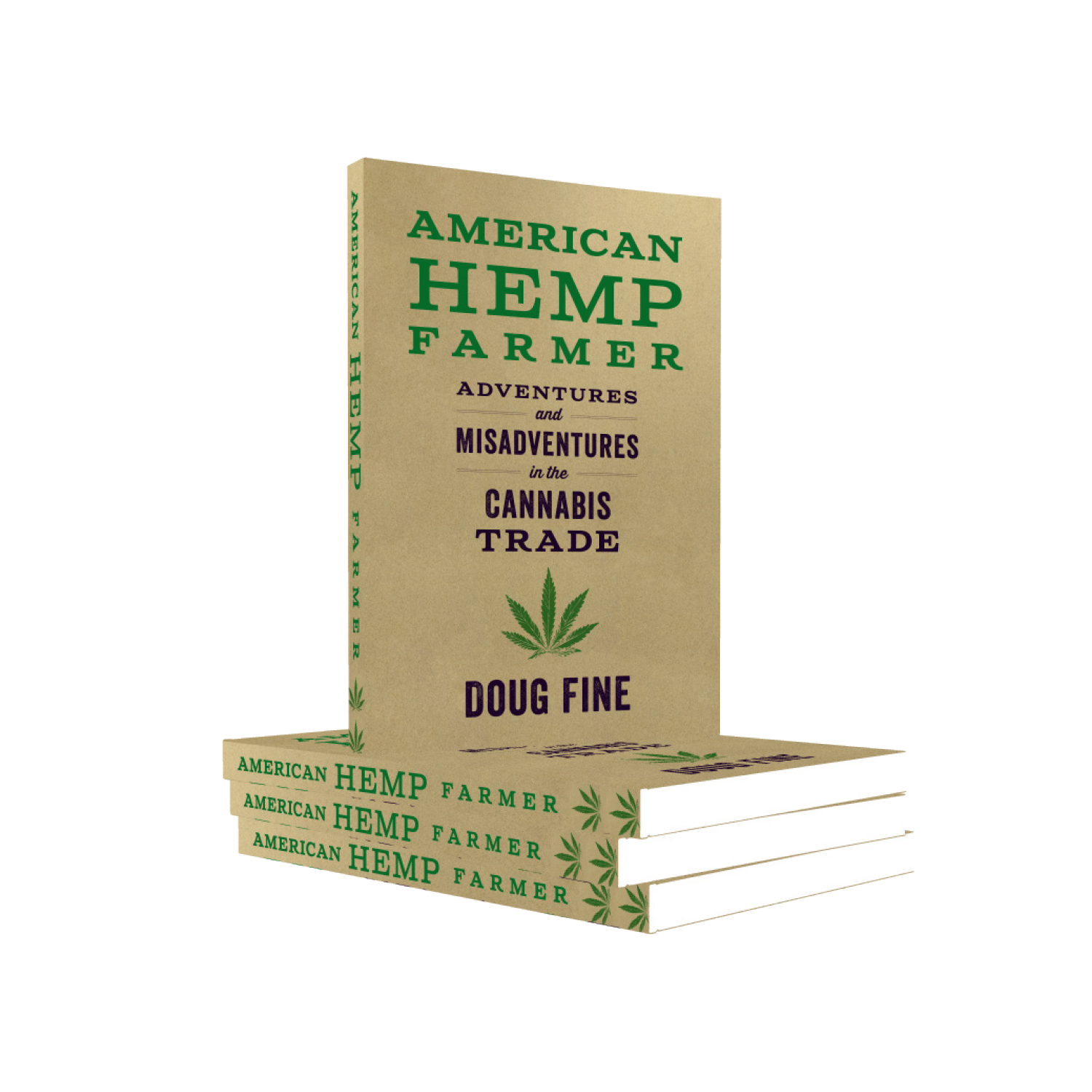
In an earlier post I promised to tell the story of my unintentionally-ceiling-fountain-sprouting, mattress-destoying (and eventually successful, even in winter) attempt to install a homemade solar hot water system at the Funky Butte Ranch. Well, it turns out that anecdote made it into the book (Farewell, My Subaru, which comes out March 25). So I’ll keep that one fresh for book-readers, and instead herein recount my equally shocking (in this case literally) effort to bring solar power into my home (and, unfortunately, into my body).
It was first time I had tried to use the sun to harness electricity, I did it on my own, and I wound up with a Sid Vicious haircut and a house so unsafe I still feel some of the shocks. All so I could charge one measly laptop. This was two years ago, back in 2005, when I was living in the off-grid straw bale shack I rented before moving to the Funky Butte Ranch. If there’s one thing the experience taught me, it was that tiny electrons are as immensely perilous when shot all over my body by the sun as they are by grid electricity.
The event started, as so many near-electrocutions do, with a stolen cigarette lighter from a 1970 Cadillac. A car that was manufactured thee year I was born, but with a driving lifespan just longer than a fruit fly. The shell of the three-block long vehicle lived in my neighbor DL’s yard.
You won’t read that in any biography of Edison or Tesla, but this is one way to produce electric current in your home. Read more…
Despite enjoying more than enough opportunity to recognize the danger of preconception in any facet of life, I had thought that the crucial thing to take care of when preparing for the arrival for a billy goat would be securing the perimeter. It wasn’t totally my fault. All goats are escape artists, and the one thing the human bestower of Walt, the world’s only moose-antlered goat, told me was suspiciously paradoxical, like a sphinx’s riddle. She said, “He’s never had an aggressive day in his life (pause to pull long piece of grass out of teeth)…is your corral very secure?”
This raised a flag, and I doubled the corral’s height from four to eight feet, laid stones around perceived weak spots along the ground, and did everything short of mining the gate. Already, well before breeding time, I noticed that I spent much of my waking life these days fruitlessly trying to fence out goats, from the orchard, from the garden, and, most of all, from my roses, evidently filet mignon to the caprine palate. That battle is ongoing and now part of a long comparative study in goat versus human intelligence being sponsored by NASA: the primary question, as it was phrased in the federal funding request, is, “when there’s 41 dang acres of delicious wildflowers to eat, why do the goats go straight after Doug’s four rose bushes?”
Anyway, on the day of Walt’s arrival, I secured the corral to a height that seemed beyond (non-steroid) goat high jump Olympic records. I threw up whatever I had to create the illusion of fence height and integrity: chicken wire, surveying streamers. It worked.
But worry about keeping a billy goat in a pen with an attractive female turned out to be a classic case of the Wrong Way Of Looking At The Problem. More apt, in terms of foreshadowing, turned out the the fact that the night before Walt’s 10-day infestation of the Funky Butte Ranch, I was at a Halloween party (dressed as a goat), at the Ranch adjacent to Walt’s. The conversation was worrying. “Hey, I got chased for a mile on my bike by a weird goat with crazy horns,” a demon told me by the punch bowl. “It was life and death for a while there. I was sure that if he caught me, he’d have killed and eaten me.” Read more…
I am bloodied and in pain as I write today. Not because of billy goat attack (that will be detailed in an upcoming post – Natalie the nanny goat is dating as we speak). Not because of any psychological bruise recent foreign policy decisions have inflicted upon me. But rather because everything is sharp in this ecosystem at this time of year.
I am essentially a seed transport mechanism for tiny, painful Chinese stars that leave my dog limping and mandates socks for me. Socks are a strange garment in the desert. And not just socks: disposable socks. Think really strong Velcro.
That’s because all the prettiest wildflowers recognize they need to get nasty in order to survive in a desert/alpine forest transition zone. The stars come from a yellow daisy-like beauty in late summer that makes the desert, horizon to horizon, look like a sunrise and drives half the human and canine population mad with allergies – choking their respiratory system from sinus to lungs (it doesn’t bother me, thank God, though Sadie gasps half the night and the vet prescribed Benadryl). I could look up the scientific name for this flower but that would be an academic exercise. Allergy sufferers across New Mexico know the plant as FYF. That is, (Expletive deleted) Yellow Flower. Even some allergists call it that. I love the flower’s effect on the Funky Butte Ranch’s panoramic palate as much as I hate its seeds and the way its potent pollen tortures people and other animals close to me.
I’ve come to think that all human weapon innovations, from grenades to poison gas, have derived from personal desert experiences by vindictive people. All is fair, they say, in love and war, and in the realm of desert seed dispersal the two seem to mix. I mean, literally interbreed. Conceptually. And so my mind wanders to the way concepts come to manifest themselves in the physical world. The photo I’ve posted here displays just a few samples of the Chinese stars that, in the billions, are the bane of life here while folks elsewhere can enjoy autumn in the more traditional areas of changing colors and cooling temperatures. We get those, too, but I don’t notice because I’m hobbling around, pulling spikes out of my spine.
Local Living seems to be coming of age. Or returning to Age. That is to say, returning to how it’s been for most of human agricultural existence. Maybe the apparent critical mass in community-based eating and goods-exchange is about cost, global environmental and human rights awareness, or a sense that the petroleum fueled cheap produce era might not have long to go. Maybe, as it is with me, it’s about health – so called “conventional” produce is almost always in some way poisonous or at least dangerous due to pesticides, growth hormones, flavor additives, partial hydrogenization, or corn-fed animals that are supposed to be grass-fed. But I don’t really care about the reasons. I’m just glad it’s happening. And I hope folks read Michael Pollan’s classic The Omnivore’s Dilemma to get a sense of not just how dangerous the industrial “food” chain is, but how iffy organic but non-local food is, in terms of community and planetary health. Organic asparagus from Chile is better than poison asparagus from anywhere, but better is to grow it yourself or get it from a community member. If the latter, you can ask the grower yourself to make sure that sustainable, soil-building and healthy growing practices were used (as opposed to the absurd pesticides and fertilizers forced upon the world over the past three quarters of a century).
This photo is from the recent Mimbres Valey Harvest Festival, where community members decided that all the apples, veggies, crafts and artwork made in our remote New Mexican valley but deemed (in the case of the delicious heirloom apples) un-marketable in an age of designer, waxy, tasteless, homogenous food in most large distribution supermarkets, should be exchanged and enjoyed. It tastes better, in the case of the food, is fresh, and studies show, is higher in nutrients than food grown far away in monoculture-degraded soil.
This was the first year I was an (albeit tentative) producer in my community, selling carrots, zucchini and kombucha. Next year, if all goes well with Natalie’s upcoming breeding, it’ll be goat milk, yogurt, cheese and ice cream as well. I’ve been offered a neighbor’s billy goat, but for reasons anyone who’s had to spend five minutes within a half mile of a billy goat will understand, I don’t want to keep him after he and Natalie have dated. But, also for reasons anyone who’s had to spend five minutes within a half mile of a billy goat will understand, I haven’t yet found a taker for this fellow Walt, who seems like a relatively docile creature. Operative word “relative.” I’ll certainly post updates here.
Anyway, almost zero carbon miles accrued on all the healthy food exchanged at the Harvest Festival. Hope these kind of things (and farmers markets and the Community Supported Agriculture model) catch on world wide. Or return to being the obvious way of doing things.
It can be profitable. I think I grossed almost $14 that day. And ate a lot of carrots.
Ever since a mystical experience in Alaska ten years ago in which a hitchhiker (who later disappeared along with his entire cabin) gave me a dozen duck eggs as thanks for an 18 mile ride in freezing rain, I’ve been a big fan of protein from the Anatidae family. Duck eggs are not just large-yolked and tasty, they’re…different than your basic incredible, edible egg. It’s like foraging for dinosaur ova. So the FBR got its first half dozen day-old ducklings from the local feed store a couple of weeks ago.
The real surprise about duck raising so far has not been how friendly, energetic and aware they are, nor even how funny their webbed pads sound slapping across the kitchen floor, but rather has come in the form of a general parenting foreshadow. On the day this photo was taken, I was all excited to give the ducklings their first post-incubator “swim” in a small washbasin a friend had left as a gift after ranch sitting recently. They’re ducks, right? They’ll love the opportunity to get out of the heated box and hit the water.
Not so much. After I bestowed upon them dunkings that resembled unintentional baptisms, the ducks cowered, shivering, in my lap. Their looks said unmistakably, “More incubation, please. Or possibly a return to the egg.” It caused me to vividly envision the first time I get all thrilled to take my eventual human children on, say, a camping trip. Thanks to the ducks, I realized that the event will likely prove much more fun for me than for the kids. (Haven’t we all seen this phenomenon in action at various zoos, puppet shows and produce aisles?) Though, as the photo shows, the ducklings dried into clean, fluffy beauties when parading on some FBR produce (and as they’ve grown they’ve become more traditionally aquaphilic). The pictured rouen duck is named Pilar, by the way. Meanwhile, next time I practice Interspecies Parental Projection by imposing genus roles on the ducklings, I’ll have to ask them if Fernando is right in his famous philosophical treatise, “It’s better to look good than feel good.” Ideally, I suppose, one aims for both.

The hardest part of conducting essential ranch chores is not biblical floods, ravenous poultry-snatching predators, or contractors who live in time warps (though all these exist), it is the mischievousness of the ranch non-humans. In the picture-is-worth-a-thousand-words category, here Melissa hitches her usual ride in the wheelbarrow when I try to cart her rich, dungy compost to the garden. A new study indicates that the Funky Butte Ranch economy loses 732 hours of productivity annually due to pain-in-the-ass goats alone. But then the same study indicates Netflix causes at least that much laxity.
When it comes to the wheelbarrow rides, in the end, Melissa simply likes to have fun. This is an admirable quality, is what I tell myself, when she snakes in through the pet door and leaps up on to my bed, all 70 pounds of her, sometimes while I’m losing productivity via Netflix.
Note the need for the Chaco sandal company to market a cowboy boot (or, as my friend Dee put it, at least a pointier toe) to suit Western lifestyles and protect against increasingly heavy goats.
Also note the need for Chaco-wearing cowboy to inflate wheelbarrow wheel. This happened, thanks to Melissa’s tire check, moments after this photo was taken.

After a couple of June hailstorms so unprecedented that even my UN-fearing gazillionth-generation rancher neighbors started tearfully confessing to their belief in climate change, my recently-thriving garden was reduced to a few stringy peas and squash. I replanted (after all, one of my big projects here is easting locally), but it was hard to keep my spirits up. If you don’t live on a driving range, you just don’t expect golf balls to fall from the sky on places like your truck windshield and head when you’re on your afternoon run. But I should‘ve known better than to lose (or even misplace) heart. By August the FBR was again an (albeit weedy) Garden of Eden.
“May this be the worst thing that ever happens to you,” my grandmother that Natalie the Goat looks like (see earlier Dispatch on the Goatlets) used to say to me when I came home weeping with a skinned knee. Indeed, when garden weeds are your biggest problem, life is pretty good.
In fact what I really learned, after procrastinating on the garden maintenance for most of July, is that the weeds were a crucial component of my gardening strategy.
See, when I finally got to thinning the prickly wild forest toward the end of the month, I found hidden carrots, leeks and broccoli that had been protectively shaded by the unwanted “weeds.” The brutal New Mexico sun had been tempered by my shrewd laziness to allow the fall harvest to grow to cornucopia levels.
“I’ve got to remember to implement this strict non-weeding regimen next year,” I said to Sadie the Coyote-banishing dog (more on that in a future Dispatch). “Not before the end of July do we start thinning and grooming.”

So after a lifetime of wandering as an itinerant writer and journalist, I finally have 41 remote acres I can call my own, and the first time I shed my clothes I get intruded upon by a 61-year-old neighbor and her poodle. I wasn’t even parading around, flaunting my right to every possible meaning of Private Property. It was about three days after I moved in. I had stripped for a shower, and my cell phone rang. As I hadn’t yet changed over to solar hot water (I haven’t forgotten my promise to post on that endeavor), I had 10 minutes to kill before my profoundly-misnamed “on-demand” water heater kicked in, so I checked the phone. It was a call I wanted to take, so I started chatting, strolling around my irises in only my Chacos. That’s when I heard the poodle yip. Followed by a chipper hello from the former owner of the place, Nicole. Knowing the property well and thus hiking in, she came to tell me about the fire danger from recent tinderbox conditions. She didn’t call first. Read more…

As one of my goals on the Funky Butte Ranch is to become something like food independent, I thought that one deer would provide my protein all winter. They say your blood type determines whether you come from agricultural or hunter-gatherer stock, but my choice had less to do with my genetics than my inexperience with firearms. In fact, a small but vicious scar bore witness to my near-fatal attempts at becoming a self-sufficient carnivore.
After I registered for the state deer hunt lottery, I started conspiring with local gun nuts, otherwise known as much of the male population of southern New Mexico. Four months, one bloody concussion and three hunting trips later, I had a bagged a grand total of one desert hare. This while churning upwards of 100 gallons of gasoline and perhaps an equal number of rifle bullet casings and shotgun shells.
Having never fired a rifle before, I knew I had to do some prep work before deer season opened in November. My first outing was a gun training session with my friend Ant at the Grant County Shooting Range on a sunny afternoon back in October. I’d messed around with a shotgun in Alaska, but I didn’t even know how to load the kind of rifle necessary for bringing down a mule deer. Ant, in agreeing to loan me his 30.07 (whatever that meant), insisted on a safety session amidst the Rush Limbaugh listeners at the range. I was all for it. I even bought the orange cap.
“It kicks like a mule,” Ant warned as we unpacked the weapon from its case.
Great. We can put probes on Mars but we can’t develop a firearm that doesn’t dislocate the shoulder? Ant shared this information after I ran to and from Wal-Mart to return (without being questioned) the incorrect caliber bullets I had initially bought for the session. When it comes to guns and ammunition, New Mexico doesn’t have a five-minute waiting period, let alone a five-day one. Children here who have never heard of Lexington and Concord can recite every word of the Second Amendment. When East Coast Democrats begin to grasp this, they might start getting some votes in the West. It’s not about handguns and crime around here. It’s about meat and antlers. And beer.
At the range, Sadie hid under the LOVEsubee driver’s seat while Ant and I popped off at paper cutouts of liberals, terrorists and environmentalists. As I aimed, Ant adjusted my hands, shoulders and feet until I was roughly in the shape of a bowline knot, and warned me about something called “Scope Eye.” This had to do with the bad things that happen to people who don’t brace the rifle butt fully while keeping their face far enough from the magnified eyepiece through which they’re aiming. Read more…
At corporate headquarters on Pluto, KFC announced it was going to non-hydrogenated oil the same week that their Silver City, New Mexico manager said I could come haul as much of their grease as I wanted. (See the March 28 posting for background on my veggie oil-powered ROAT, the Ridiculously Oversized American Truck)
It had been decades since I had visited the establishment — I had no idea they offered apple turnovers these days. I pulled up in front of the Colonel’s portrait/security camera, found the dumpster and grease trap area, and before I had finished setting up my pump, an employee wearing a doo-rag approached me, carrying an armload of garbage bags. I was wearing latex gloves and had driven a huge truck up to a staff-only area. I looked more like an esoteric pervert than a thief. I felt I had to take the initiative.
Before he could say anything, I blurted guiltily, “Christie said I could take your waste oil off your hands.”
He looked at me as if I’d just said, “I have an imaginary friend named Snuffleupagus.”
“Um. OK with me, Holmes,” he said, and then a thought occurred to him. “What for?”
“I’m gonna drive on it.”
He watched my pump suck the sickly ooze into a five gallon container.
“Whoa. Do you just pour it right in your tank?”
“Nah, I have sort of a laboratory back home, in my barn. It’s pretty easy though.”
“And then all your gas is free? That (expletive deleted) rules. Where do I get one?”
And so another crunchy greenie was converted. Hallelujah!
But it was only a start. They say a preacher should feel satisfied if he converts one person during a sermon. While I was filling up, no less than eight employees gathered around, alone or in clusters, marveling at someone driving on grease. It was like a tent revival out there. I found myself preaching about things carbon-neutrality and oil company profits. Two guys in aprons asked me to take their picture near the grease trap.
By the way, vegetable oil driving isn’t technically free. I have to pay state and federal gas taxes (21 cents per gallon to Santa Fe, and 18.4 cents to Washington, DC) on the honor system. Not bad when diesel costs around $3 per gallon. And that’s keeping aside the carbon-neutral karma.
Joy! A new energetic peeping sound in the barn as I mosied in to collect eggs confirmed a second birth. For me, this is an encapsulation of all experience. The moms sure feel redeemed. This one is a loud and energetic little thing. Maddie the cat was in the barn overseeing security. The Inupiak Eskimos have a word for this: Aarigaa. Life is what it is and it’s so good.
It just occurred to me that it’s odd in the blog age to read stories in reverse…redemption before fall. It’s like dessert before dinner, a concept to which I have never really objected.
I discovered upon this morning’s feeding that yesterday’s chick didn’t make it. This, of course, is something I know I have to get used to if I’m going to live a ranch life. But as a guy who doesn’t even really like to thin plants (who says I should decide which beets get to live and which die?), it’s a sad morning. For the brooding hens, too, of course, who are quietly snuggled together in a corner of the barn. All the rest of the chickens are giving them space. The somewhat good news is that none of the other FBR mammals had anything to do with it – sometimes they just don’t make it.
I came home from a town run today to the first non-insect, non-rodent birth on the FBR — a chick. This is the offspring of this evidently exotic Asian variety that my generous friend Kat gave me when I started on the journey toward bringing Avian Bird Flu one step closer to my life. All I know is she’s a great layer (the hen, Kat’s married) — good for an egg a day, easy.
Talk about a proud momma. This chicken has not been anywhere in her short, nine month life but two ranches, has no formal education, and knows exactly how to raise a baby. In fact, she and my second brooding hen (what an apt word, as so many barnyard phrases are: it means essentially sitting and meditatively staring with occasional blinks, without eating or drinking, for over a month), seem to be co-parenting. One tends the live chick, the other dances between their two nests. Looks like several more fuffly little future egg-producers mght be comng soon. Between them, they’re sitting on three more eggs.
The real test now will be in the critical thinking skills of my other FBR mammals. I think Sadie the dog (pictured below) can handle the list of regs. now, which goes, “It’s OK to attack rabbits and quail, and to be vicious toward coyotes, wolves, bears, rattlesnakes and mountain lions. It’s likewise OK to bark meanly at first to human strangers until and unless I say it’s OK to go back to your default of Loving Everyone and Everything in the Cosmos, and it’s NOT OK to attack songbirds, chickens of any age, the FBR cats or human babies.”
I’ve also posted the latest aerial photo of the FBR (that is, from the cliff above my canyon), reflecting all 11 solar panels, and the goat pen. Hopefully the summer monsoon will be sufficient both to get my Stitzel Creek running (it’s dry and just out of the shot in the foreground at the moment, and where I do my morning sun salutation stretching), and to bring up area rivers for boating and innertubing. But not too high, so as to flood me in for two months, like last year. That flood started a couple of days after I moved in. Great way to get to know a place: being imprisoned in it. Heck, I could be working in an office somewhere. And at least I didn’t flip my vehicle in the nearby Mimbres River, like several of my neighbors.
As I write, I see outside the sliding glass window, below the hummingbirds, that Natalie and Melissa, the goats, are charging around in circles with Sadie. It’s unclear who’s herding whom. But they can keep this up for hours. It’s all one weird family here on the FBR.